Retro Cottagecore Kitchen Clipart: A Designer's Nostalgic Toolkit
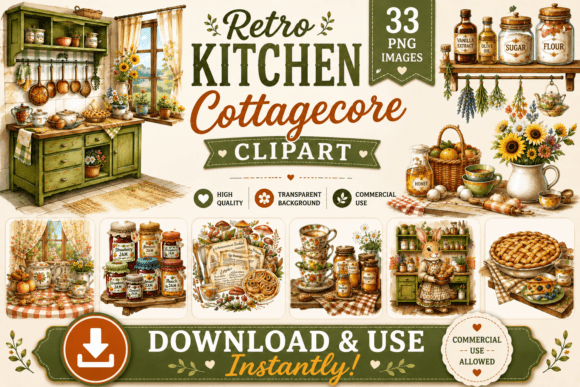
In an era of sleek minimalism, a powerful counter-trend is capturing the hearts of designers and audiences alike: the warm, nostalgic embrace of retro cottagecore. This aesthetic, particularly through assets like Retro Cottagecore Kitchen Clipart, offers a tangible bridge to a simpler, more handmade feel. For graphic designers, this isn't just a fleeting trend; it's a versatile toolkit for injecting authentic warmth and storytelling into modern projects, creating visual communication that resonates on an emotional level.
Why This Aesthetic Resonates in Modern Design
The appeal of a vintage 70s farmhouse palette lies in its ability to evoke comfort, authenticity, and nostalgia. In graphic design, these elements are powerful tools for brand identity. A brand aiming to communicate homeliness, artisanal quality, or sustainable values can leverage this style to build an immediate, intuitive connection with its audience. The visual language—think teacups, rustic pantry shelves, and handwritten recipe books—tells a story of care and tradition, which is invaluable in packaging design for food brands, editorial layouts for lifestyle magazines, or social media graphics for bakeries and homesteaders.
Practical Applications for Creative Professionals
The true value of a curated clipart bundle is its plug-and-play versatility across the design workflow. Here’s how these elements can be applied:
- Branding & Logo Design: Use individual icons like a jam jar or a whisk as secondary brand marks or favicon elements. The color palette can inform the entire brand system.
- Marketing & Advertising: Create cohesive print design materials like flyers, menus, or coupon cards that feel authentically vintage, standing out in a digital-heavy landscape.
- Digital Products & UI Design: Enhance the user experience of recipe blogs, cooking apps, or kitchenware e-commerce sites with themed icons, borders, and section divers that improve visual hierarchy and engagement.
- Packaging & Merchandise: Apply illustrations to product labels, box designs, or printable art prints. The transparent PNG format is ideal for sublimation and print-on-demand workflows.
- Editorial & Web Design: Break up text-heavy pages with thematic spot illustrations. These assets add visual interest and reinforce content themes in blog posts, cookbooks, and digital magazines.
Integrating Assets with Design Principles
Simply having beautiful assets isn't enough; effective integration is key. When using Retro Cottagecore Kitchen Clipart, consider these graphic design fundamentals:
- Consistency is Crucial: Ensure the vintage style of the clipart aligns with your project's overall typography and color palette. Pair these illustrations with complementary serif or handwritten fonts and a warm, muted color scheme.
- Balance and Hierarchy: Use clipart as accent elements, not overwhelming backgrounds. They should guide the eye, not distract from the core message. A single, well-placed illustration can anchor a layout more effectively than a cluttered collage.
- Scalability and Quality: High-resolution PNG files with transparent backgrounds are non-negotiable for professional use. They ensure crisp results whether used as a small icon or a large print design element, maintaining quality across all applications.
Ultimately, the power of a themed asset bundle like this lies in its ability to streamline the creative process while elevating the final product. It provides a cohesive visual shorthand that can instantly communicate a brand's personality or a project's mood. By thoughtfully selecting and applying these creative assets, designers can craft more compelling narratives, build stronger brand identities, and deliver work that feels both professionally polished and genuinely heartfelt. In a crowded digital space, that human touch is what makes a design truly memorable.